

Bold ways of Being South Asian: Choreography as Critical Intervention – Reporting from Kala The Arts’ International Symposium
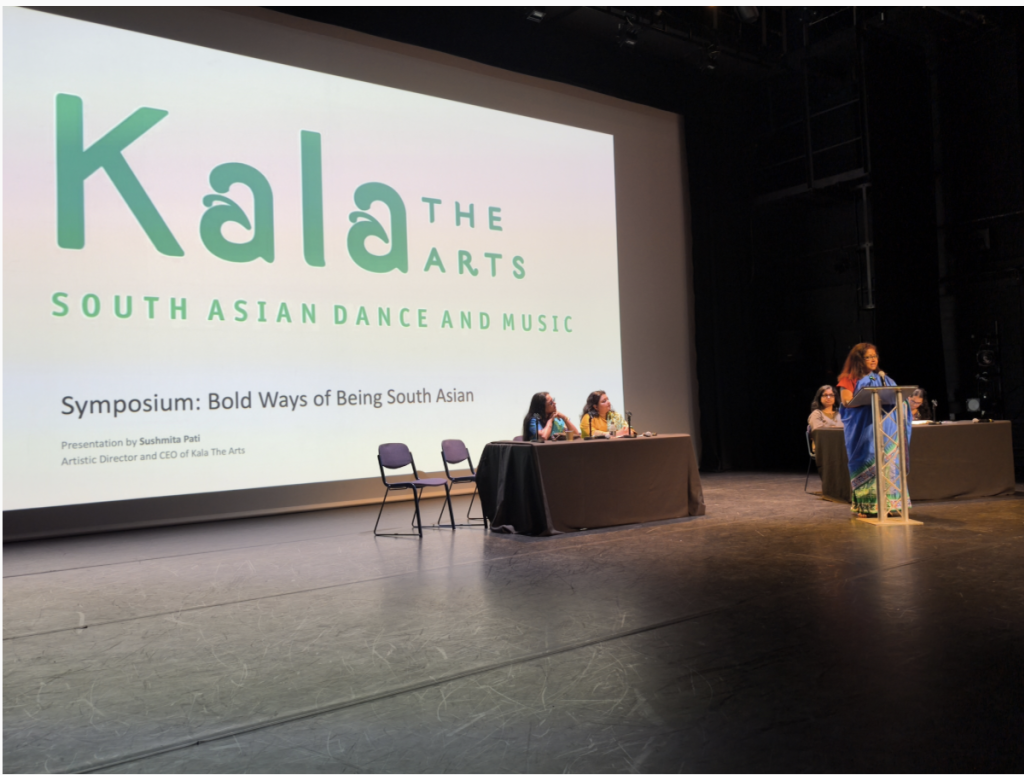
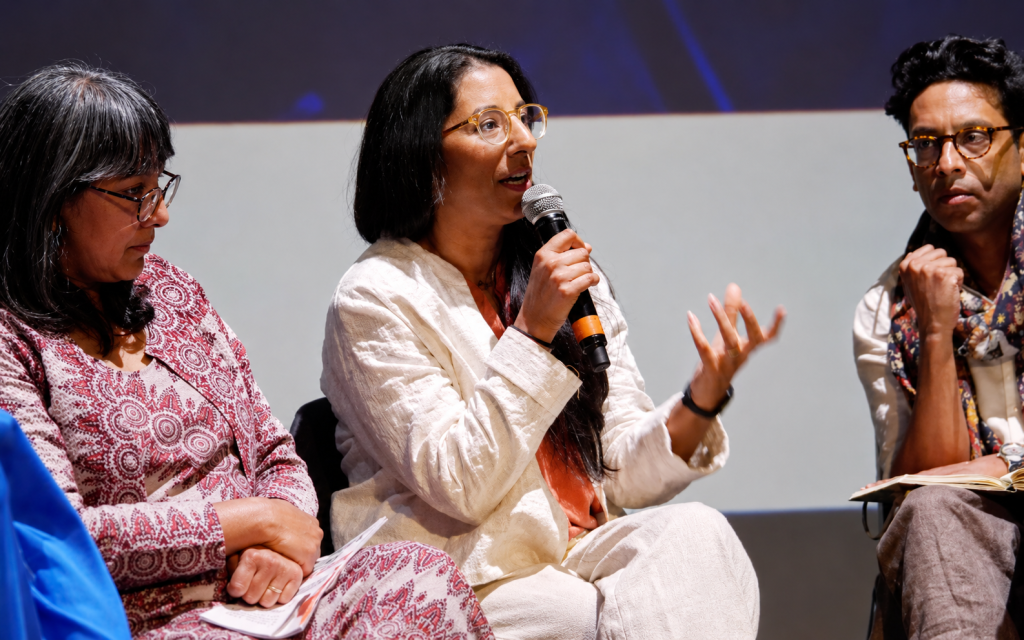
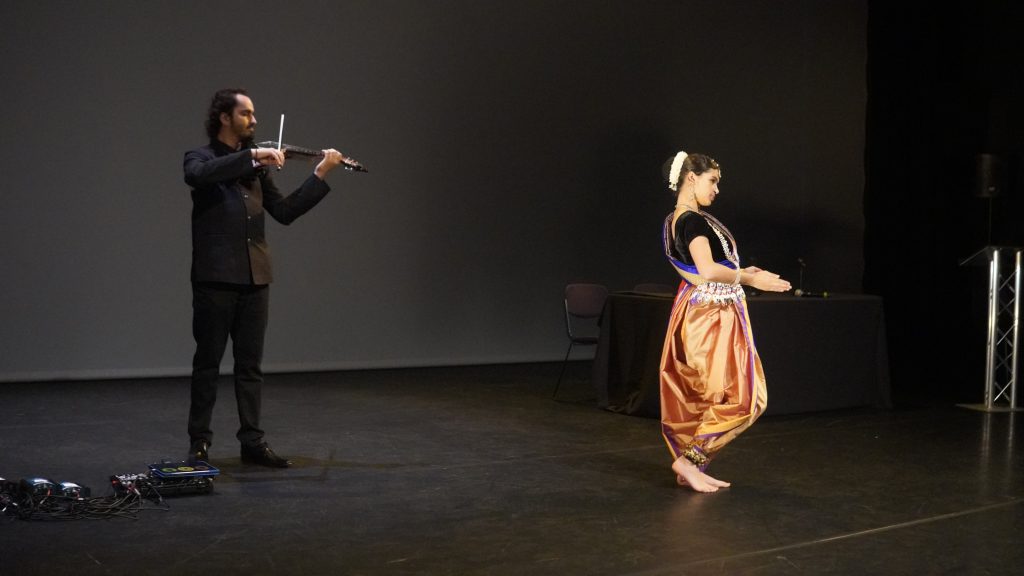
In May 2026, Kala The Arts brought dancers, musicians, scholars, arts professionals and thought leaders together at Sadler’s Wells, London, for an international symposium exploring choreography as critical intervention.
Speakers and guests travelled from across the UK, as well as France, Spain and India, to the symposium, creating a rare opportunity for the sector to pause and reflect – not simply on the richness of South Asian dance, but on the structures, assumptions and inequalities that continue to shape it.
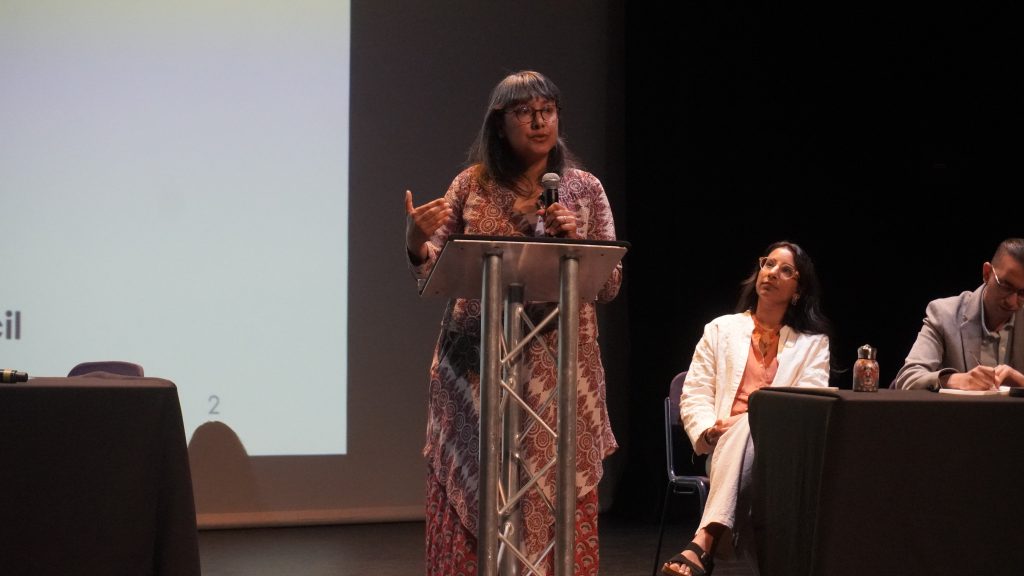
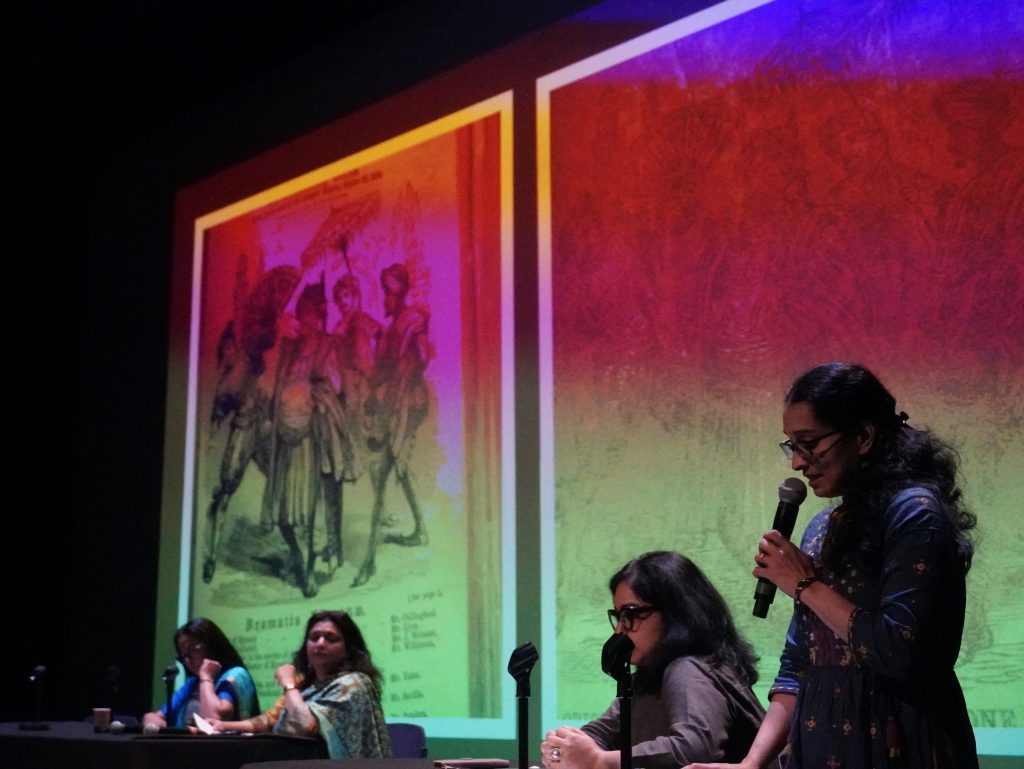
Across three themed sessions and an open house, 13 speakers shared perspectives shaped by their experiences as South Asian practitioners. Representatives from Arts Council England also joined the conversations, creating an important space for artists and organisations to engage directly with questions around funding, career development and progression.
The day was ultimately about asking difficult but necessary questions: Who gets seen? Who gets heard? Who has access? And what needs to change to create a more sustainable and equitable future for South Asian dance?
The Conversations
Several themes emerged throughout the day, connecting artistic practice with questions of access, education, funding and representation.
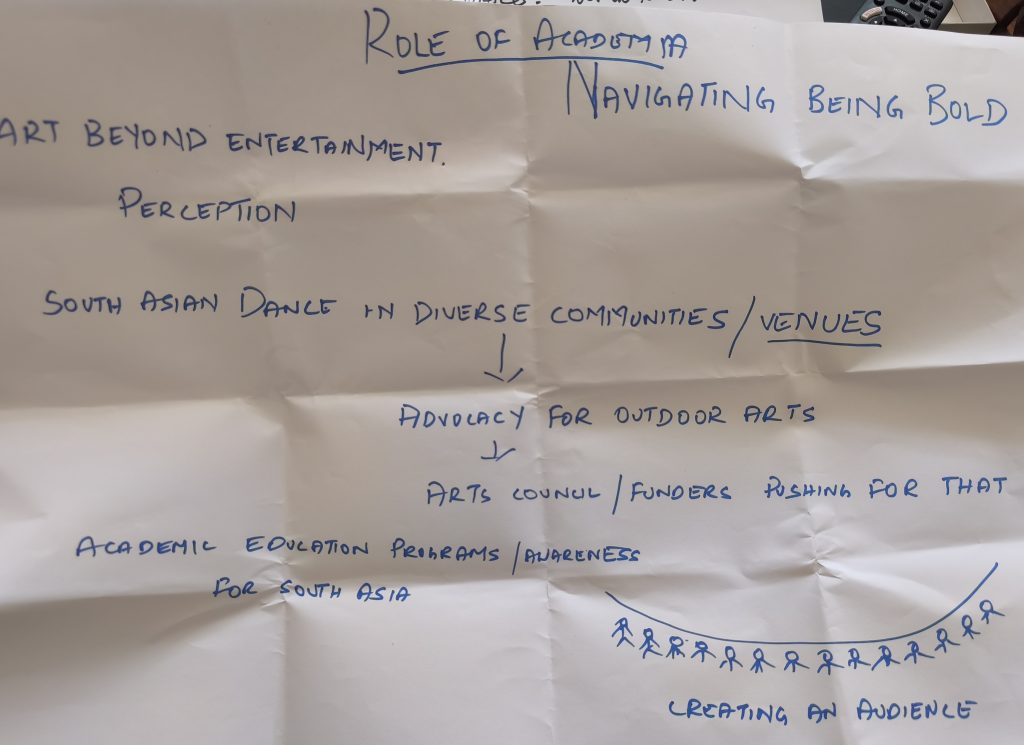
Beyond entertainment
Participants reflected on the personal and creative labour involved in being a South Asian artist. Artists are often expected to navigate questions of identity and cultural representation while also pushing artistic boundaries.
This led to a wider challenge to the perception of South Asian dance as simply entertainment or cultural celebration. The work can be all of these things, but it can also be critical, experimental, political and intellectually rigorous.
The question is how the sector can create more space for artists to be bold, take risks and define their own practices.
Who gets through the door?
The symposium also considered how theatres and indoor venues can become more diverse and accessible.
Outdoor performances are often seen as spaces where a wider range of audiences can participate. How, then, can theatres create that same sense of openness and belonging?
Ideas included encouraging artists, through funding, to work with diverse audiences; exploring dance-theatre and interdisciplinary formats; and investing in sustained audience development rather than one-off engagement.
The focus was not simply on getting people through the door, but on building relationships that encourage audiences to return.
Education and the next generation
The need to embed South Asian dance more strongly within schools and universities was also highlighted.
Education can play a vital role in creating awareness, developing future practitioners and audiences, and recognising South Asian dance as an artistic and academic discipline in its own right. It also brings in fresh perspectives into the sector.
The symposium also prompted a more challenging question: where are the young people in these conversations?
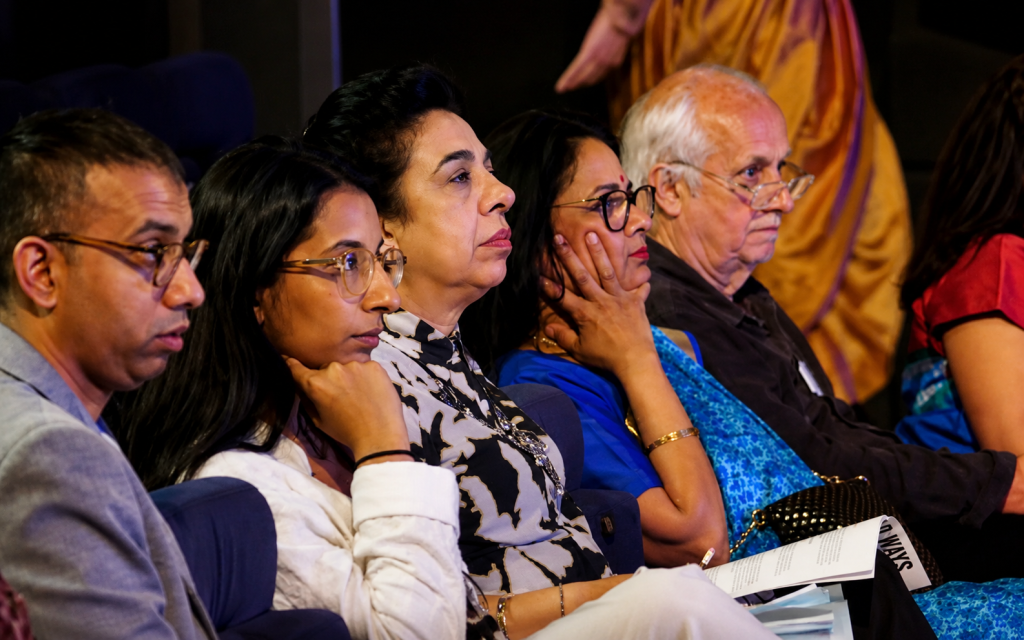
There was a recognition that young people were not strongly represented at the event itself. Perhaps the language and format of symposiums do not always feel accessible to them. Perhaps the sector needs to rethink how it invites young people into the conversation. This felt like an actionable point as the organisation collects feedback from young people it works with. Our work is mainly with young people and our evaluation processes take their perspectives seriously.
For first-generation immigrant families, South Asian dance has often been a way of passing culture to their children. But for third- and fourth-generation communities, that connection cannot always be assumed.
Stories new and old, new formats and exploring different ways of engaging may be needed to ensure that tradition is not a way to pass down cultural dias, prejudice and stagnation.
Looking critically within
The discussions also turned inward.
Celebrating South Asian arts should not mean overlooking inequalities within South Asian communities and the sector itself. Caste, gender and other marginalised identities must be part of the conversation about representation and access.
As Dr Aparna Mahiyaria reflected, there is a need to ask what gets pushed to the margins even as we celebrate our arts.
A stronger sector is one that can celebrate its richness while remaining willing to examine itself critically.
Photos credit: Joshua Lowry.











From conversation to action
One of the most important reflections from the Artistic Discussion Group was the gap between academic discussion and artistic practice.
Many of the challenges raised during the symposium are not new to practitioners. Artists and organisations have been working on the ground for years to address questions around access, representation, young people, audiences and sustainability.
The opportunity now is to connect this lived experience more meaningfully with academic research and institutional thinking.
There is a need for research that works with artists, rather than simply studying them — and for knowledge-sharing that produces tangible value for the sector.
The symposium also highlighted several areas for continued action:
- Engage young people differently, creating youth-led conversations and more accessible formats.
- Strengthen artist–academic collaboration, ensuring research responds to and builds upon existing practice.
- Challenge narrow perceptions of South Asian dance, recognising its critical, contemporary and experimental possibilities.
- Develop audiences for the long term, investing in relationships rather than one-off attendance.
- Strengthen education and pedagogy, embedding South Asian dance within schools and universities.
- Explore diverse funding and partnerships, including greater engagement with the South Asian business and philanthropic community.
- Continue looking critically within the sector, ensuring questions of caste, gender and marginalisation remain central to conversations about the future.
A wider picture: Arts Council England
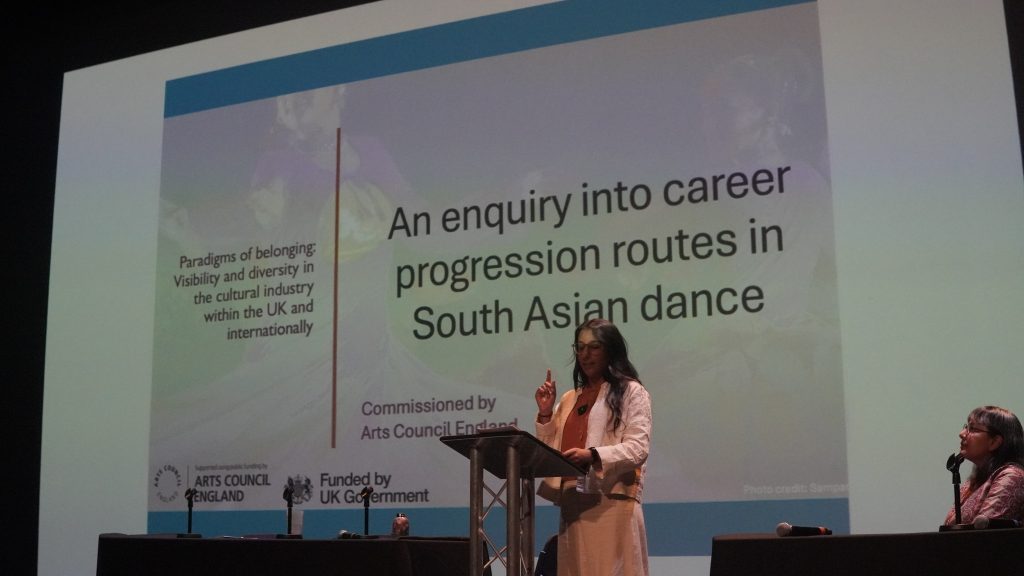
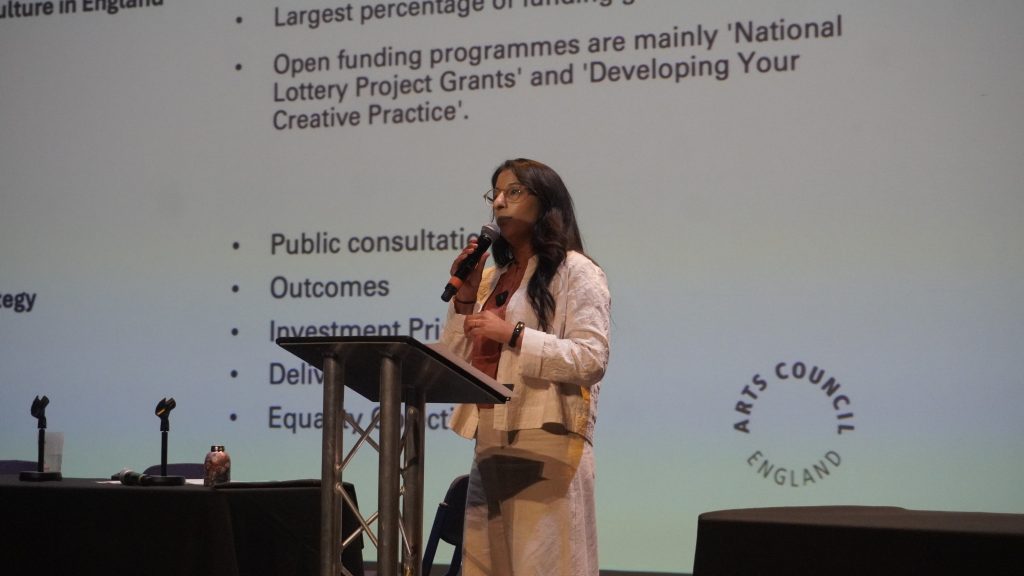
The symposium also provided an opportunity for Arts Council England to share its new enquiry into career progression routes in South Asian dance, alongside a practical resource covering training, mentoring, funding and networks.
The research, informed by roundtables and consultations held across England in December 2024, recognises both the vibrancy of the sector and the structural challenges affecting career development.
As Seetal Kaur, Relationship Manager (Dance & Diversity) at Arts Council England, noted, the work aims to support stronger connections, clearer progression routes and improved access to opportunities for artists working across South Asian dance.
Abid Hussain, Director, Diversity at Arts Council England, similarly recognised the significant contribution South Asian dance makes to the cultural life of the country, while acknowledging that more needs to be done to ensure underrepresented artists can access the opportunities they deserve.
The publication of this research marks an important step — but, like the symposium itself, it is part of an ongoing conversation.
Voices from the day
“As a dance scholar-artist, I was motivated to think more about the immediate and long term impact of my research. It was extremely productive to learn about the ongoing efforts of arts organizations across the UK, and the outcomes of funded programs.”
— Dr Priya Venkat, Raman University of Exeter
“The sessions were incredibly insightful and the whole experience felt deeply empowering. It was a privilege to be among such encouraging and inspiring fellow speakers.”
— Meera Vinaya Krishna, Head of Operations and Business Development, Bhavan UK
“I genuinely enjoyed it and I met a lot of super interesting people.”
— Professor Anamik Saha
“There is a need to turn a critical eye on ourselves as practitioners of South Asian arts and think about what gets relegated to the margins as we celebrate our arts.”
— Dr Aparna Mahiyaria, Lecturer in Drama, University of Exeter
What happens next?
A symposium is valuable not only for what happens in the room, but for what happens afterwards.
For Kala The Arts leading and its partners, the challenge now is to turn conversation into continued action: to bring more young people into the sector, connect research with practice, develop sustainable audiences and careers, and create space for the full diversity of South Asian artistic voices. The organisation, being publicly funded, bears a resolution to improve cultural cohesion. It performs this not by sweeping differences under the carpet. But producing something beautiful from that friction and difference.
South Asian dance is already vibrant, evolving and ambitious. The work ahead is to strengthen the structures around it — so that artists can create boldly, organisations can thrive, audiences can engage meaningfully, and voices that have historically been pushed to the margins can move closer to the centre.
The symposium gave us a space to pause, question and listen. The symposium also created a network amongst people who would not have otherwise come together. The symposium will have an afterlife in the connections it made between people. We shall launch a South Asian network for creative consultancy. This will be our effort to keep our work grounded in scholarly work.
The second iteration will involve a creative process that emerges out of the critical inputs. Artists will be invited to make work challenging the social and political issues that emerged as a result of this symposium. Some of these artists will be young people who will engage with critical thinking through choreography. This will be a necessary next step in fulfilling the aim of the symposium in offering choreography as critical intervention.
Next steps to follow…
Thank you
Your submission has been received successfully