

The Art of Dance from the Indian Subcontinent has been shortlisted for a What’s On Reading Cultural Diversity Award.
As a collaboration between Reading Museum and Kala The Arts, we are incredibly excited to receive recognition of the exhibition and its impact on the local community. Below, the Museum’s Community Engagement Curator, Brendan Carr, speaks to the project’s achievements to date, and how our collaboration has ‘reshaped how Reading understands, values, and celebrates the cultures that enrich its communities’.
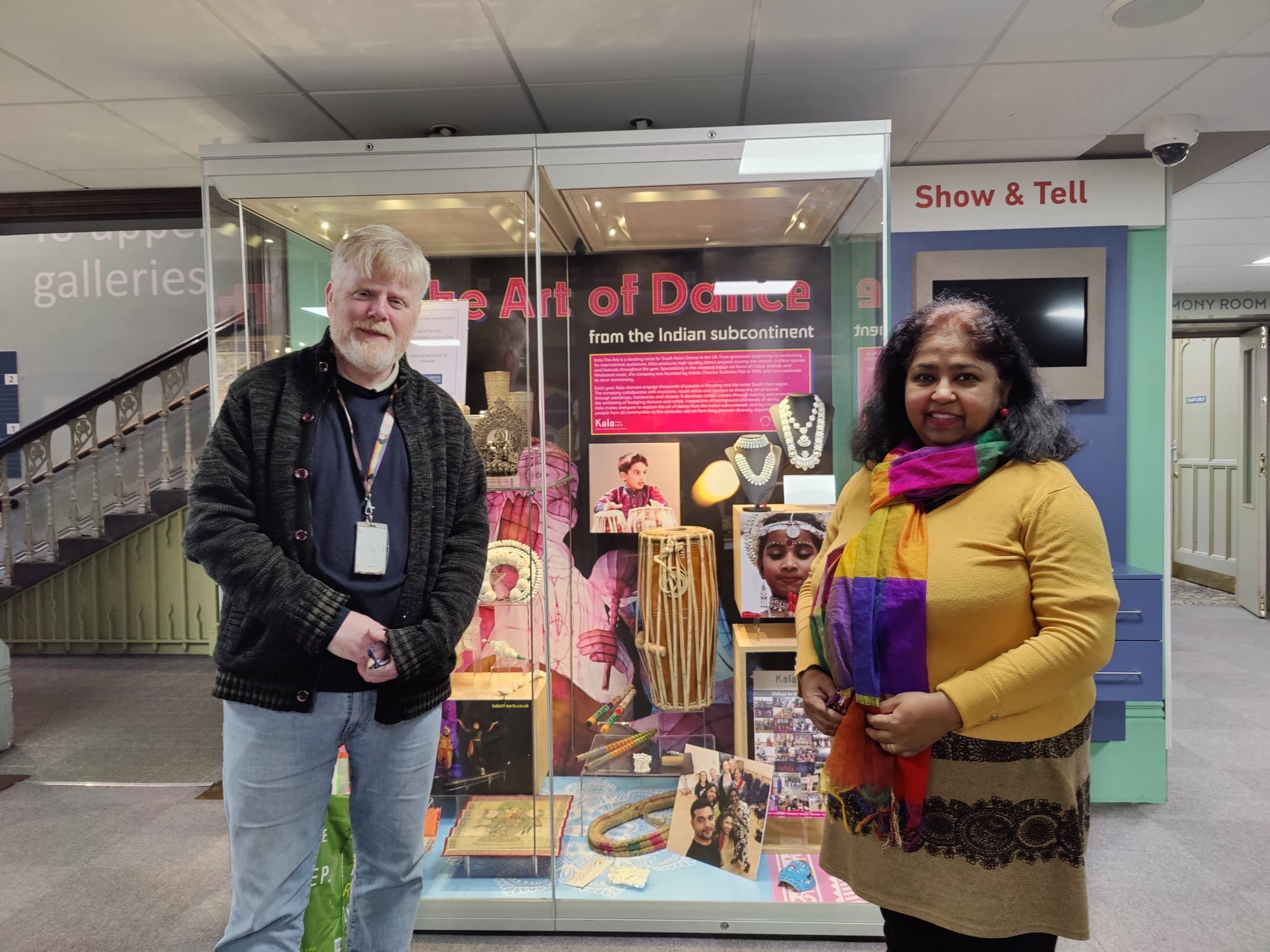


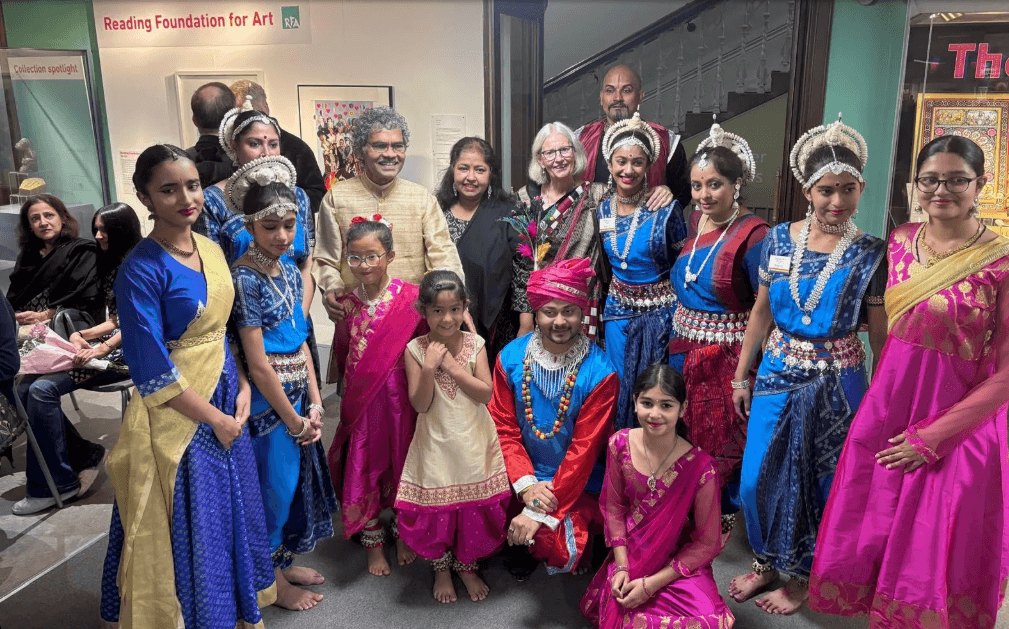

“The Art of Dance from the Indian Subcontinent at Reading Museum stands as a landmark achievement in cultural inclusion, accessibility, and representation, a community led exhibition and programme that not only celebrated South Asian dance traditions but actively opened doors for under-represented communities across Reading and the wider region. Created in collaboration with Kala The Arts, a leading UK South Asian arts organisation, and supported by Arts Council England, the exhibition welcomed almost 55,000 visitors during its run from October 2024 to May 2025, making it one of the most widely engaged cultural diversity projects in the museum’s recent history.
From its inception, the project foregrounded authentic community partnership. Working hand-in-hand with artists, cultural practitioners, volunteers, and local South Asian communities, the Museum and Kala The Arts curated a rich and multidimensional experience that explored Odissi, Bharatnatyam, folk traditions, and wider South Asian dance heritage. Artefacts and costumes from both the Museum’s and Kala’s archives, including rare musical instruments, Patachitra artworks, and community-donated items, were displayed alongside newly created interpretive material selected collaboratively with community members, ensuring accurate representation and cultural sensitivity.
The exhibition was far more than a display: it was a platform for accessibility, participation, and representation. Free public workshops, open to dancers of all ages, backgrounds, and abilities, were led by renowned artists including Urbi Basu and Sushmita Pati, enabling hundreds of participants to experience Odissi as a living, expressive art form. These sessions brought dance into an inclusive environment where beginners, elders, disabled participants, and families could learn together, breaking down cultural and physical barriers to participation.
Live performances were central to the project’s impact. The exhibition launched with an electrifying programme of demonstrations, talks, and the presence of international guests, including Dr. Pradyumna Kumar Mahanandia, whose attendance underscored the event’s cultural significance. Artists such as Kiran Ratna and young coordinator Yousuf Hossain shared deeply personal stories that illuminated how South Asian dance empowers individuals from marginalised backgrounds to find identity, expression, and community through the arts.
Throughout the exhibition’s run, performances such as Shivoham, a collaboration between choreographer Sushmita Pati and composer Rohan Roy, brought classical Indian dance to diverse audiences within the Museum’s galleries, transforming the Welcome Gallery into an inclusive performance space. These events demonstrated how culture can build bridges: audiences from Reading, London, Slough, Southampton, and even international visitors shared in moments of beauty, storytelling, and spiritual tradition that many had never encountered before.
The project also strengthened representation within the Museum’s collections and curatorial practice. With guidance from Kala The Arts and research collaboration with the Victoria & Albert Museum, the team brought significant South Asian artefacts into public view, some for the first time in the UK; while developing new, community-centred methods for interpreting global cultural heritage in a local context.
The Art of Dance from the Indian Subcontinent exemplifies what the Diversity Award stands for: a transformational cultural initiative that elevates under-represented voices, broadens access to heritage, and creates meaningful opportunities for participation, learning, and belonging. It has reshaped how Reading understands, values, and celebrates the cultures that enrich its communities.”
By Brendan Carr, Reading Museum’s Community Engagement Curator